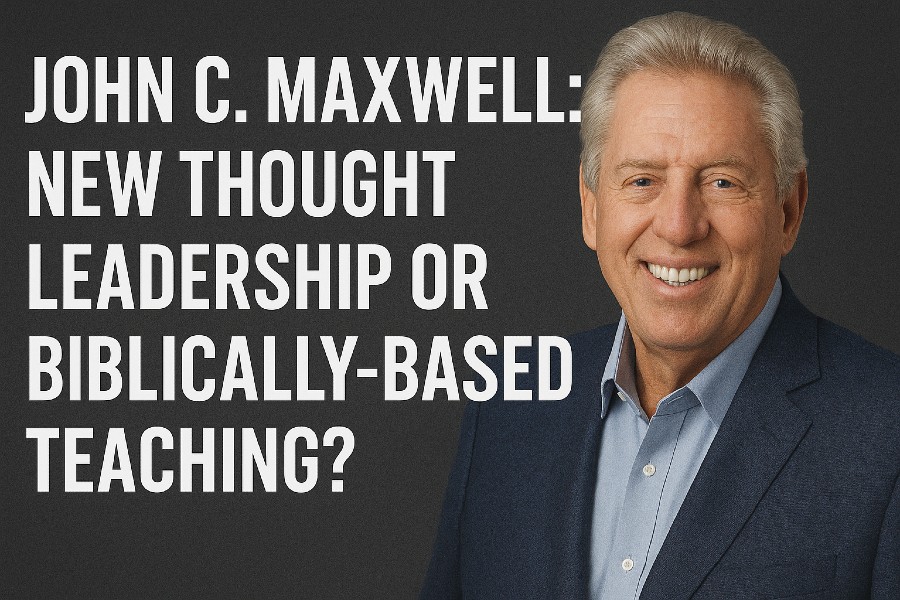

John C. Maxwell: New Thought Leadership or Biblically-Based Teaching?
John C. Maxwell is one of the most recognized names in leadership training worldwide.
With over 30 million books sold, thousands of keynote speeches, and the global reach of his Maxwell Leadership programs, he has influenced both business executives and church leaders alike.
But a growing question remains: Is Maxwell’s training truly biblical in foundation, or is it more aligned with New Thought and motivational philosophy than with Scripture?
Maxwell’s Christian Roots
Before becoming a world-renowned leadership expert, Maxwell spent over 30 years as a pastor. He earned a Master of Divinity and a Doctor of Ministry and pastored several congregations while developing his passion for leadership.
His faith has been woven into many of his writings, and he has often stated that leadership grounded in character, conviction, and Christlikeness is essential.
His Maxwell Leadership Bible is one example of his effort to integrate leadership principles with biblical texts, offering short lessons and commentary on leadership themes within Scripture.
Many readers find it practical and easy to understand, though some critics note that it leans more toward motivation than deep theological reflection.
For many, this balance makes Maxwell’s material accessible—rooted in Christian values but applicable to anyone, whether in the church or the boardroom.
Concerns About New Thought Influences
Despite his pastoral background, Maxwell’s work has drawn criticism for leaning more heavily on secular and New Thought influences than on Scripture itself.
- Positive Thinking Tradition – Maxwell frequently cites authors like Norman Vincent Peale and James Allen, both of whom are tied to the “positive thinking” and New Thought movement. These philosophies often emphasize self-belief and mental attitude over dependence on Christ.
- Misuse of Scripture – Critics argue that Maxwell often pulls verses out of context to support leadership principles, using the Bible more as a motivational resource than as the authoritative Word of God.
- Pragmatism Over Gospel – Many of his lessons are highly practical, focused on influence, success, and effectiveness. While helpful in business, some theologians argue this pragmatism sidelines the deeper gospel-centered call to humility, sacrifice, and servanthood.
- Superficial Theology – Apologists like Dr. Richard Howe warn that Maxwell’s theology can be shallow and sometimes theologically unsound, especially in his early books such as The Winning Attitude.
Voices from the Church
Reactions to Maxwell within Christian circles are divided.
Supporters appreciate his ability to communicate leadership principles in a way that resonates with both believers and secular leaders. His teachings on vision, communication, teamwork, and influence have inspired countless pastors and lay leaders.
However, critics argue that Maxwell’s influence in churches has shifted leadership culture toward CEO-style pragmatism rather than biblical servanthood.
As one Christian commentator put it:
“John Maxwell writes solid secular leadership strategies with enough subtle Christian-value flavoring that a believer might catch his references … But if you’re looking for a strongly Christian, follow-the-example-of-Jesus kind of leadership material, Maxwell won’t get you there.”
A Balanced Perspective
So, where does John C. Maxwell’s training truly fit?
- Strengths: He communicates timeless leadership principles, integrates faith at a values level, and provides highly applicable tools for personal and organizational growth.
- Weaknesses: His reliance on New Thought and motivational influences often dilutes biblical authority, and his use of Scripture can be superficial compared to theological or discipleship-centered approaches.
Ultimately, Maxwell’s material is most effective for those seeking practical leadership development with a Christian flavor, but not necessarily for those desiring deep, gospel-rooted, biblically rigorous leadership training.
Conclusion
John C. Maxwell has left an undeniable mark on leadership culture worldwide. His faith shaped his perspective, but his framework leans heavily toward universal principles of success and influence rather than distinctively Christian discipleship.
For business leaders, his insights may prove invaluable.
For pastors and Christian leaders, however, Maxwell’s work is best used alongside more biblically grounded resources, ensuring that leadership in the church remains firmly rooted in the gospel of Jesus Christ, not merely in principles of influence and success.